
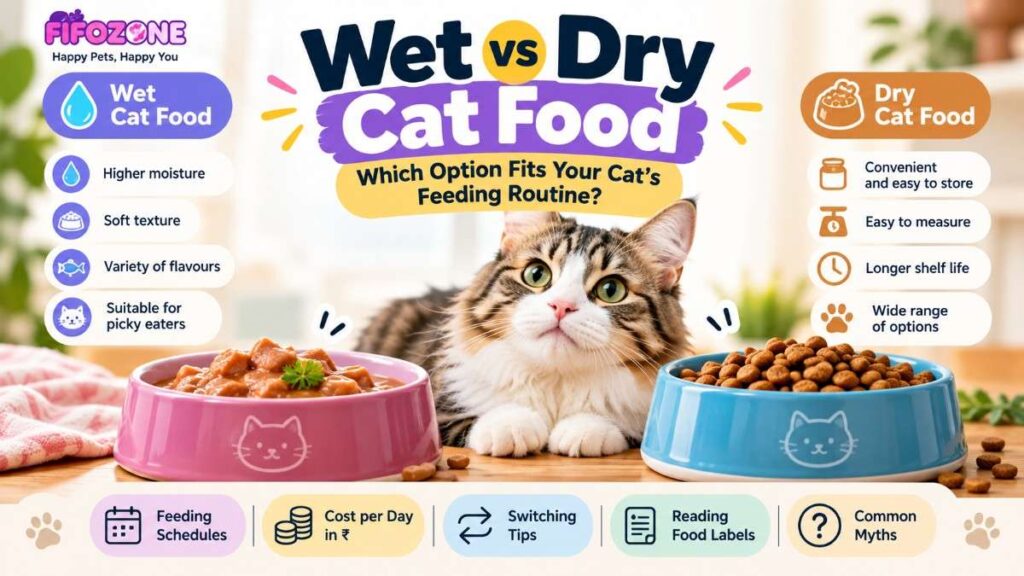
The decision between giving your cat wet food or dry food should be based on your cat’s eating habits, its hydration requirements, its age and its daily routine.
Since wet food has more moisture in it, dry food on the other hand is easier to store, measure and serve.
As long as they are properly formulated both types of food can offer a complete nutrition. The correct choice should be based on the product’s nutritional quality and on your cat’s particular needs rather than just its texture.
Wet and dry food are just two parts of choosing the right diet for your cat. Age, feeding preferences and nutritional needs also matter when comparing options. For a broader overview, read our guide on how to choose cat food in India, covering dry, wet, kitten and adult food.
What Is the Difference Between Wet and Dry Cat Food?
The key difference between wet and dry cat food lies in their moisture content; wet food contains a great deal more water whereas dry food has less and is typically sold in the form of kibble. This difference influences the texture, the amount needed when feeding and the amount of water your cat obtains from its food. You should always make sure that the product gives your cat complete nutrition for its life stage.
| Feature | Wet cat food | Dry cat food |
| Moisture | High moisture content | Low moisture content |
| Texture | Soft, often available as chunks, gravy, jelly or pâté | Firm, crunchy kibble |
| Storage | Refrigerate after opening as directed on the label | Usually easier to store after opening when sealed properly |
| Serving | Often served in cans, pouches or trays | Easy to measure into a bowl or feeder |
| Feeding routine | May require more frequent serving and careful handling after opening | Convenient for planned portions and some feeding routines |
| Hydration | Provides additional water through food | Cats need to obtain more water separately |
| Nutrition | Depends on the specific formula | Depends on the specific formula |
Is Wet Cat Food Better for Hydration?
Wet cat food can be used to increase a cat’s water intake since it has a lot more moisture than dry food, which makes it useful for cats that don’t drink much from their water bowl. Yet wet food does not take the place of having access to fresh drinking water, and its total nutritional value still comes down to the formula you select.
Consider wet food if your cat:
- Drinks little water on its own.
- Prefers soft textures or food with gravy.
- Needs additional moisture through meals.
- Eats better when food has a stronger aroma or softer texture.
If your cat has a urinary or kidney condition, ask your veterinarian which diet is appropriate. The best food choice depends on the specific condition and should not be based on moisture content alone.
What Are the Benefits of Dry Cat Food?
Dry cat food is convenient for day-to-day feeding since it is easy to measure, store and serve; it is suitable for homes that have a simple feeding routine or those that use an automatic feeder. The fact is that dry food has less moisture than wet food and it cannot be assumed that ordinary kibble helps with dental health unless it has been specifically designed and supported for that purpose.
Dry food may suit your routine because it:
- Is easy to portion for scheduled meals.
- Can be stored conveniently in a sealed container.
- It is available in different formulas for kittens and adult cats.
- Makes it simple to track the amount served.
Keep fresh water available throughout the day. Follow the package instructions and avoid leaving food exposed for long periods, as heat, humidity and pests can affect its quality.
Which Is Better for Indoor Cats: Wet or Dry Food?
The best choice for indoor cats will vary according to their activity level, body condition, water intake and total calorie requirements. Wet food might help to boost their moisture intake, whereas dry food can make it easier to measure out the portions. As long as the formula is complete and balanced, indoor cats can have either type of food, but the amount given to them each day should take into account their level of activity and any weight-management needs.
When choosing food for an indoor cat, consider:
- Activity level: Less active cats may need careful calorie management.
- Water intake: Wet food can contribute more moisture to daily intake.
- Body weight: Measure portions instead of repeatedly topping up the bowl.
- Food preference: Choose a texture your cat eats comfortably.
- Life stage: Use a formula appropriate for your cat’s age.
No single food type is best for every indoor cat. Monitor your cat’s body condition and adjust feeding with veterinary guidance when needed.
Can You Feed Your Cat Both Wet and Dry Food?
Yes, it is possible for many cats to eat both wet and dry food, on the condition that the foods chosen are appropriate for their life stage and the total amount given each day satisfies their nutritional requirements. Feeding them together will provide a variety of textures and help to increase their moisture intake without giving up the convenience of dry food. The important point is to take into account the calories coming from both types of food rather than feeding them a full portion of each.
For a practical mixed-feeding routine:
- Check the calorie information on both products.
- Decide how much of the daily intake will come from wet food and dry food.
- Measure each portion instead of estimating.
- Introduce the new food gradually if your cat is not used to it.
- Monitor appetite, stool quality and body weight.
For example, if wet food is served in the morning and dry food later, both meals should contribute to one planned daily ration. Follow the feeding guidance on the packaging and ask your veterinarian for a suitable amount if your cat needs weight management or has a medical condition.
How Do You Choose Wet or Dry Cat Food for Kittens and Adult Cats?
Since kittens and adult cats have different nutritional requirements, it is more important to take account of the cat’s life stage than simply to choose between wet or dry food. Kittens that are growing require a type of food that is formulated for growth, whereas adult cats usually need one that is designed for adult maintenance. You should check the label to make sure that the product is complete and balanced for the life stage intended.
Use these points when comparing options:
- Kittens: Choose food specifically formulated for growth. Wet, dry or mixed feeding may be suitable depending on the product and the kitten’s needs.
- Adult cats: Select a complete diet that fits body condition, activity and feeding routine.
- Senior cats: Consider appetite, dental comfort, hydration and any health conditions.
- Cats with medical needs: Follow veterinary advice on the appropriate food and feeding plan.
If you are changing your cat’s regular diet, introduce the new food gradually unless your veterinarian advises otherwise.
How Should You Store Wet and Dry Cat Food?
Storing food properly will help to keep its quality and decrease spoilage. Dry cat food should be kept in its original packaging or in a suitable sealed container in a cool and dry place. After opening wet food, you should follow the refrigeration and storage instructions given on the label, cover the amount that is not going to be used and throw away any food that has been left out for longer than the recommended time.
Follow these storage practices:
- Dry food: Keep it sealed away from moisture, heat and direct sunlight.
- Wet food: Refrigerate opened portions as directed by the manufacturer.
- Serving bowls: Wash bowls regularly and remove uneaten food promptly.
- Expiry dates: Check the date, packaging condition and storage instructions before serving.
In warm weather, avoid leaving wet food in the bowl for extended periods. The safe serving time depends on the product and environmental conditions, so follow the manufacturer’s guidance.
Where Can You Compare Wet and Dry Cat Food Online in India?
At FifoZone, people who have cats are able to look at the different types of wet and dry cat food available and compare the ingredients, the package sizes and the nutritional information. Before deciding on a product it is important to check its recommended life stage, the feeding guidelines and whether it is classified as complete or complementary food. You should compare the various options on the basis of your cat’s preferences and requirements rather than choosing just because of the brand or the price.
Use these collection pages to explore available options:
- Wet Cat Food: Compare wet food formats and available pack sizes.
- Dry Cat Food: Browse kibble options and compare product details.
- Kitten Food: Explore food formulated for growing kittens.
- Cat Food: Browse the wider cat food range.
Product availability and prices may vary. Always review the latest product information before ordering.
Which Cat Food Format Fits Your Daily Routine: Wet, Dry or Mixed Feeding?
The right and best cat food format you choose should be based on your own routine, your cat’s tastes, its need for hydration and its daily calorie requirements. Wet food contains more moisture, dry food is easy to measure and store, and feeding both types together offers the benefits of both. You should select a complete and balanced diet appropriate for your cat’s life stage and ensure that each meal adds to the required daily amount of food.
Wet Food: A Practical Choice for Moisture-Focused Feeding
Wet cat food is suitable for people who are able to serve measured portions and who store opened ones properly. Because it has a higher moisture content it can help in increasing the amount of water that a cat gets from its food. But opened pouches, cans or trays may have to be kept in the refrigerator, and any food that is not eaten should be dealt with in accordance with the product’s storage instructions.
Wet food may suit your routine if:
- Your cat prefers soft textures, gravy or pâté.
- You want to provide additional moisture through meals.
- You can serve measured portions at regular times.
- You have suitable refrigeration for opened products.
Explore FifoZone’s Wet Cat Food collection to compare available formats and pack sizes.
Dry Food: A Convenient Option for Scheduled Feeding
Dry cat food is easy to measure, to store and to serve, which makes it a good choice for owners who have busy schedules. It can be used effectively with set meal times or with automatic feeders. Yet since dry food has less moisture than wet food, fresh water must always be provided. It is still important to control portion sizes because convenient feeding does not mean that feeding should be unlimited.
Dry food may suit your routine if:
- You prefer easy-to-measure portions.
- You need food that is simple to store.
- Your cat accepts the kibble comfortably.
- You want to plan meals around work or other commitments.
Browse FifoZone’s Dry Cat Food collection to compare available products.
Mixed Feeding: Combining Wet and Dry Cat Food
Mixed feeding involves including both wet and dry cat food in the same daily feeding routine. It offers the moisture found in wet food together with the convenience of dry food, but both amounts should be counted as part of the cat’s daily calorie intake. You should select complete and balanced products appropriate for your cat’s life stage and avoid giving your cat the full recommended portion of both foods without making adjustments to the total.
Mixed feeding may suit your routine if:
- Your cat enjoys different food textures.
- You want to include more moisture in meals.
- You prefer a combination of scheduled wet meals and measured dry portions.
- You can track the total amount fed each day.
Sample Daily Cat Feeding Schedules for Wet, Dry and Mixed Food
A practical feeding schedule for cats involves dividing their daily food allowance into appropriate meals taking into account the cat’s age, appetite, health, and the household’s routine. Adult cats generally do well on measured meals at fixed times, whereas kittens may require feeding more frequently. The examples given below illustrate possible routines, not fixed guidelines for portion sizes; you should still follow the instructions on the product label and adhere to your veterinarian’s advice.
Example 1: Wet Food Feeding Schedule
| Time | Example routine |
| 7:00 AM | Measured wet food meal |
| 1:00 PM | Another measured portion, if included in the daily plan |
| 7:00 PM | Evening wet food meal |
| Throughout the day | Fresh drinking water available |
Divide the daily allowance across meals according to the product’s feeding guidance. Refrigerate wet food as directed, and avoid leaving uneaten food out for longer than the manufacturer recommends.
Example 2: Dry Food Feeding Schedule
| Time | Example routine |
| 7:00 AM | Measured dry food portion |
| 1:00 PM | Optional planned portion, if included in the daily allowance |
| 7:00 PM | Remaining measured portion |
| Throughout the day | Fresh drinking water available |
You can divide the daily dry food allowance into two or more meals, depending on your cat’s needs. If using an automatic feeder, measure the total daily amount and check that the device dispenses the correct portions.
Example 3: Mixed Feeding Schedule
| Time | Example routine |
| 7:00 AM | Measured wet food portion |
| 1:00 PM | Measured dry food portion |
| 7:00 PM | Wet food or the remaining planned portion |
| Throughout the day | Fresh drinking water available |
In a mixed feeding plan, the wet and dry portions should add up to the cat’s daily food allowance. Do not give the full daily recommendation for each product separately. Adjust the amounts using their calorie information and monitor your cat’s weight and body condition.
Cost per Day in ₹: Comparing Wet, Dry and Mixed Cat Food
The amount that you have to pay each day for cat food will depend on the price of the product, the size of the pack, and how much your cat eats. In certain instances, wet food may cost more per day, while dry food could have a lower cost per calorie, although prices differ according to the product. You should compare the real cost of the daily amounts recommended rather than making judgments about value solely on the price per pack.
How to Calculate the Daily Cost of Cat Food
Use this formula for each product:
Cost per gram = Pack price ÷ Pack weight in grams
Daily food cost = Cost per gram × Grams fed per day
For mixed feeding, calculate the wet and dry portions separately and add their costs.
Illustrative Daily Cost Comparison
The following figures are hypothetical examples for explaining the calculation. They are not current FifoZone prices or feeding recommendations.
| Feeding format | Example pack price and size | Example daily amount | Estimated daily cost |
| Wet food | ₹80 for a 100 g pouch | 200 g | ₹160 |
| Dry food | ₹600 for a 1 kg pack | 60 g | ₹36 |
| Mixed feeding | Same example products | 100 g wet + 30 g dry | ₹98 |
These examples use simple pack-price calculations only. The daily amounts are illustrative and should not be used as a feeding guide. Wet and dry foods have different calorie densities, so the amounts cannot be considered nutritionally equivalent. Compare products using their feeding guidance and calorie information.
What Affects the Daily Cost?
- Product type: Ingredients, brand and preparation method affect price.
- Calories per gram: Different foods provide different amounts of energy in the same weight.
- Serving size: The quantity your cat needs affects daily spending.
- Pack size: Larger packs may cost less per gram, depending on the product.
- Storage and waste: Food discarded after opening can increase the effective cost.
For a fair comparison, calculate the cost of feeding each product according to its own instructions and your cat’s needs.
How to Switch Your Cat Between Wet and Dry Food Safely
It is usually necessary to change your cat from wet food to dry food, from dry food to wet food, or to offer a mixture of the two kinds of food gradually. Since cats can be sensitive to changes in smell, taste and texture, it is helpful to introduce the new food over a number of days so that they can get used to it. You should keep an eye on your cat’s appetite, the quality of its stools and its general behaviour, and if it refuses to eat or shows any other worrying symptoms you should get veterinary advice.
A Gradual Food Transition Plan
| Transition stage | Suggested approach |
| Early stage | Introduce a small amount of the new food alongside the familiar diet. |
| Next few days | Increase the new food gradually if your cat accepts it well. |
| Middle stage | Continue adjusting the balance while monitoring appetite and digestion. |
| Final stage | Complete the change only if your cat is eating comfortably and tolerating the new food. |
The pace depends on your cat. Some cats need more time than others, so do not force a rapid transition. If your cat has a medical condition or needs a prescribed diet, follow your veterinarian’s instructions instead of using a general transition plan.
What If Your Cat Refuses the New Food?
A cat may refuse a new food because of its texture, smell, temperature or unfamiliar taste. Offer the new option gradually, serve it according to the product instructions and keep the feeding area calm. Do not let a cat go without food for an extended period to force acceptance; contact a veterinarian promptly if your cat stops eating or seems unwell.
Is Wet Cat Food Complete? How to Read Cat Food Labels in India
It is not the case that all wet cat food is formulated to give cats all the nutrients they need; some of it are complete foods while other types are complementary foods which are meant to be given in addition to a complete diet. Before incorporating it into your cat’s regular meals, you should carefully read the packaging to find out its intended use, its nutritional information, the stage of life it is suitable for and the feeding instructions.
When comparing wet and dry cat food, checking the label helps you understand the ingredients, nutritional values and intended life stage of each product. For a closer look at what these details mean, read our guide on how to read a cat food label in India.
What to Check on a Wet Cat Food Label
| Label detail | What to look for |
| Product type | Whether it is described as complete food or complementary food |
| Life stage | Whether it is intended for kittens, adults or another stated group |
| Ingredients | The listed ingredients and protein sources |
| Analytical constituents | Declared values such as protein, fat, fibre and moisture, where provided |
| Feeding guide | Recommended portions and instructions for use |
| Net quantity | The amount of food in the pack |
| Storage instructions | How to store unopened and opened food |
| Batch and date details | Batch identification and applicable manufacturing, best-before or expiry information |
| Manufacturer or importer | Product details that help identify the responsible business |
Label formats can vary by product and origin. Do not assume that a high protein figure or an appealing ingredient name alone proves that a food is complete and balanced.
Why “Complete” and “Complementary” Matter
Complete food is formulated to provide the nutrients needed when fed as directed for its intended life stage. Complementary food is not intended to meet all nutritional needs on its own and generally needs to be paired with a suitable complete diet. Check the label before using a product as your cat’s main food.
Wet vs Dry Cat Food Myths: What Cat Owners Should Know
Because of some widely held ideas concerning wet and dry cat food, it can be difficult to choose a diet. Just because a food is wet doesn’t mean it is healthier, dry food doesn’t always keep the teeth clean, and the most expensive product is not necessarily the one that is best for your cat. Before making a decision, you should compare the nutritional adequacy, the calorie content, the moisture level, the feeding instructions and your cat’s particular needs.
Myth 1: Wet Food Is Always Better Than Dry Food
Fact: Both wet and dry food can provide complete nutrition when properly formulated. Wet food offers more moisture, while dry food is convenient to store and measure. The right choice depends on the individual cat and the product’s nutritional quality.
Myth 2: Dry Food Keeps Every Cat’s Teeth Clean
Fact: Ordinary dry kibble should not be treated as a substitute for dental care. Some diets are specifically designed to support dental health, but not all dry foods have that purpose. Ask your veterinarian about suitable dental care for your cat.
Myth 3: Cats Eating Wet Food Do Not Need Drinking Water
Fact: Wet food contributes water through meals, but cats should still have access to fresh drinking water. Water intake needs vary, and cats with certain medical conditions may need specific feeding and hydration advice from a veterinarian.
Myth 4: Mixed Feeding Causes Weight Gain
Fact: Mixed feeding does not automatically cause weight gain. Excess calories can contribute to weight gain regardless of food format. Measure wet and dry portions together, follow suitable feeding guidance and monitor your cat’s body condition.
Myth 5: The Most Expensive Food Is Always the Best
Fact: Price alone does not determine nutritional quality or suitability. Compare complete-food status, life-stage suitability, ingredients, calorie content and feeding instructions. Choose a diet that meets your cat’s needs and fits your budget.
Frequently Asked Questions
1. Is wet or dry cat food better for cats?
It is not the case that one is better for every cat; wet food contains more moisture whereas dry food is more convenient to store and to measure. You should select a complete and balanced formula suitable to your cat’s life stage, health and feeding routine.
2. Can cats eat wet and dry food every day?
Yes, it is possible for many cats to eat both kinds every day provided that the products are appropriate and the quantities are balanced. You should take into account the calories coming from both foods, make sure they have fresh water, and gradually introduce the changes.
3. Does wet cat food help cats drink more water?
Wet food leads to higher water intake during meals since it has more moisture in it, and it may be helpful for cats that do not drink much from their water bowl, but fresh water should always be available.
4. Is dry cat food good for indoor cats?
As long as the dry food offers complete nutrition the dietary requirements of indoor cats can be met by feeding them appropriate amounts. You should keep an eye on their body weight and level of activity and avoid feeding them unlimited quantities if they have a tendency to overeat.
5. Can I switch my cat from dry food to wet food?
A slow transition is generally helpful when getting cats used to a new texture and taste. If it’s appropriate, introduce the new food over a number of days and keep an eye on your cat’s appetite and digestion. Get advice from a vet if your cat refuses to eat or if you have any concerns about its health.
6. How do I know whether cat food is nutritionally complete?
Look on the product label for a statement saying that the food is complete and balanced for the stage of life it is intended for. Complementary foods and treats are not designed to supply all the nutrients needed when used as the only food.
7. Where can I buy wet and dry cat food online in India?
On FifoZone you can look at the various ranges of wet and dry cat food. Before selecting a product for your cat, you can compare the ingredients, the suitability according to the cat’s life stage, the nutritional information, the pack sizes and the prices.


Leave a Comment & Share Your Advice
Your experience can help other pet parents!
Top Comments